Unhealthy Habits Aren't The Problem, They're Coping Mechanisms
We Know What To Do To Stay Healthy, So Why Are We Getting Worse At Doing It?
We have never had as much information about how to stay healthy as we do today. Whatever your preferred lens, medical, integrative, alternative, even quantum, we know a huge amount about what supports human health. So why are we getting worse at doing it? The rocketing rate of non-communicable disease is showing us just how much we are failing.
When people come to me with a health issue or weight challenge, I recognise that the health issue itself often isn't the problem, it's a symptom. This sounds like a subtle shift in perspective, but it has a huge impact on how we go about addressing it.
Similarly, those symptoms may have been caused, at least in part, by unhealthy habits, but again, unless I understand the real story, I'm not able to truly help someone recover their health. Talk to people for long enough and you'll often discover that the unhealthy habits aren't really the problem either. They're coping mechanisms.
Again, a subtle shift in perspective, but the approach is night and day when you have this depth of insight.
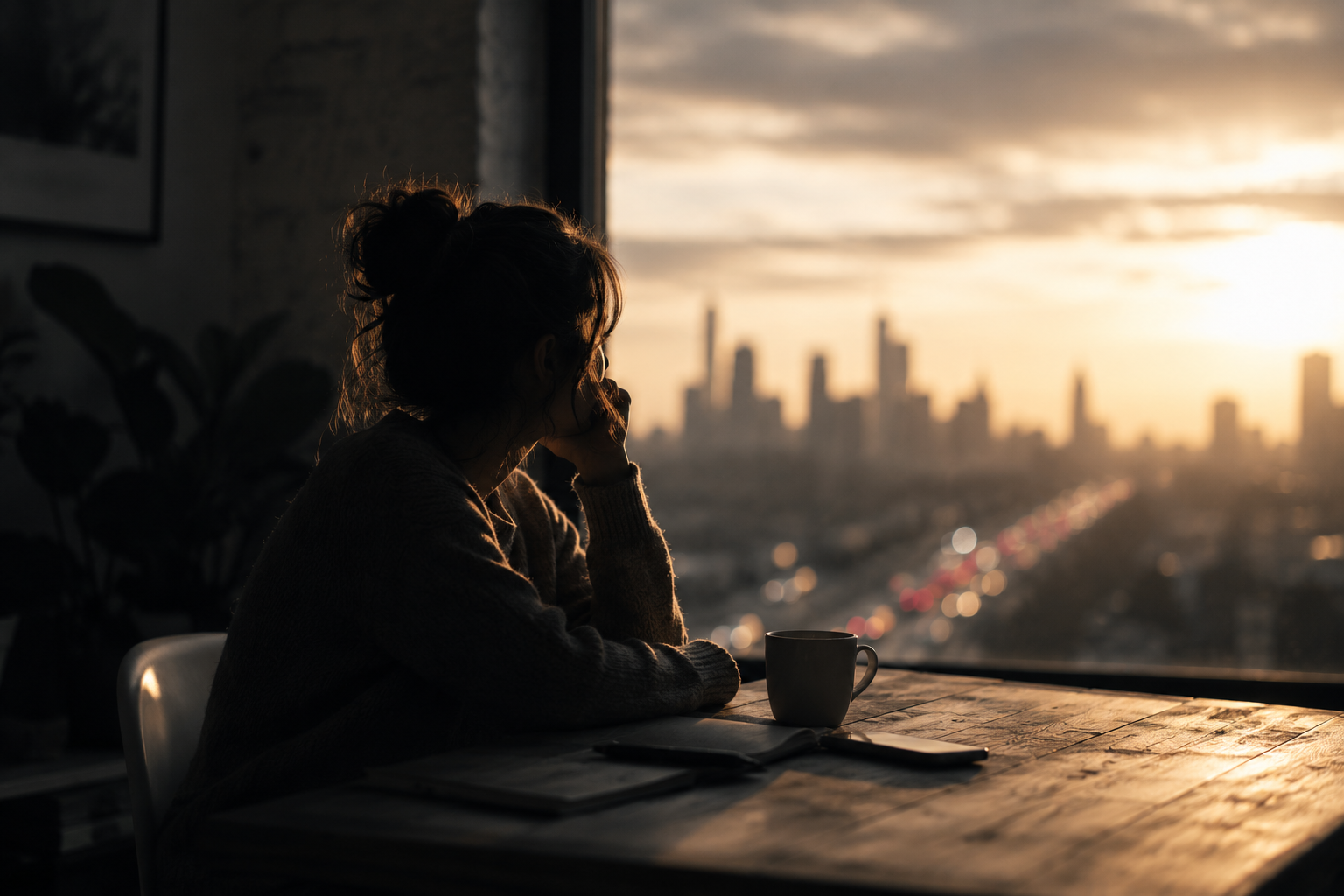
Now transpose this onto society. Take a look around. How many people do you see totally stressed out of their minds, under pressure, struggling to make ends meet, or simply trying to find enough hours in the day?
The real problem, I believe, is that we've created systems and environments increasingly misaligned with the proper functioning of the human psyche. Stress, fear and anxiety have become normalised, ranging from a constant background hum to complete debilitation.
Sugar, alcohol, smoking, excessive scrolling, inactivity, staying up too late. These aren't always simply "bad choices". Very often they're coping mechanisms, providing a momentary hit of relief, reward, escape or energy.
Until we start seeing the real problem, information-led health campaigns will continue to fall short. Because the problem isn't necessarily a lack of information, willingness or motivation. It's often chronic stress driving choices that provide temporary relief.
Unfortunately, we've also built environments in which unhealthy behaviour is frequently the path of least resistance. Try finding a genuinely healthy meal to grab at your local train station.
Highly palatable, convenient food is cheap, widely available and relentlessly marketed. Screens provide instant entertainment and escape. Everything has been designed to remove friction and deliver reward. Meanwhile, telling a financially stretched, time-poor parent to cook healthy meals from scratch isn't really behaviour-change policy.
I increasingly think stress is the missing organising concept.
When people are chronically overloaded, behaviour changes. We naturally gravitate towards things that reduce immediate friction or provide immediate reward: palatable food, scrolling, entertainment, alcohol, convenience, inactivity, even staying up too late to reclaim some personal time.
The problem is that those behaviours can then undermine sleep, metabolic health, mood and energy, making healthier behaviours even harder the following day. The coping mechanism starts feeding the very problem it was helping us cope with.
For many people, food, screens and convenience aren't simply unhealthy choices. They've become self-regulation tools.
Yet much of preventative health continues to treat the problem as one of information or individual choice.
Eat better. Move more. Sleep more. Drink less. Stop smoking.
None of that advice is wrong. But it assumes the individual is operating in a relatively neutral environment and simply needs enough knowledge or motivation to make the right choice.
They aren't.
There is another layer to this. Commercial systems have become extraordinarily sophisticated at understanding human behaviour. Food, gaming, social media, streaming, retail and advertising use personalisation, convenience, reward, identity, emotional association and behavioural science to influence our choices continuously.
Public health is competing for the same human being, often with information. The contest isn't remotely symmetrical.
Broadly speaking, the NCD crisis is no longer predominantly a knowledge problem, it’s an environment, stress and behaviour-design problem. And we have to realise that we cannot sustainably remove a behaviour without truly understanding the job it is doing.
If we take this thinking right back to childhood, prevention starts to look very different. It's not simply about teaching children that broccoli is healthier than biscuits. It's about helping children develop healthy ways to regulate themselves, experience reward, nourish themselves, move, rest and recover, before less healthy coping mechanisms become deeply embedded.
The next evolution of preventative health isn't simply telling people how to live healthier lives, it's creating lives they don't constantly need to escape from.
About the author
Dr Laura Holland is an advisor in preventative health and human capability, with a background in economics, nutrition and integrative medicine. Through BeU, she works privately with individuals, advises organisations, and writes about the future of health, behaviour and human flourishing

We’re Ageing Faster
We need to protect biological health from the very beginning.
We’re ageing at a faster rate, according to new research published in Nature Medicine, which reports that more recent generations are experiencing greater biological ageing relative to chronological age, and that this accelerated ageing is associated with an increased risk of early-onset solid cancers.
For example, “in Australia, Canada, the United Kingdom (UK) and the US, people born in the 1990s face at least a fourfold higher risk of early-onset colorectal cancer compared with those born in the 1960s.”
The study also observed that more recent birth cohorts exhibit an even greater biological age gap, which may reflect the accumulation and interaction of exposures across generations.
Emerging evidence suggests that accelerated ageing is linked to a broad range of exposomic factors, and in this context, the researchers point towards earlier and more sustained exposure to obesity and metabolic dysfunction, poorer diet quality, prolonged sedentary time, circadian disruption and pervasive environmental chemicals, alongside other, still uncharacterised factors that collectively alter our systemic biological environment.
This should make us all think differently about longevity!
We are investing extraordinary amounts of money, science and innovation into extending healthspan and slowing biological ageing later in life, which is exciting and important.
But what if the most valuable longevity interventions happen decades before we even start thinking about ageing? And as crazy as this sounds, thanks to the modern, arguably toxic, environments we have created over the past 50 years, what if longevity now needs to begin in childhood?
Protecting metabolic health, nourishing developing bodies and brains, moving, sleeping, building healthy relationships with food and reducing harmful exposures, are all basics that are currently not being met. This latest research is quite clear that we can no longer overlook the fundamentals of good health, in order to safeguard healthspan, quality of life and human capacity.
We need to rethink what environments we allow to be created, and ensure they support health, rather than continually ask the body to compensate for them, because the body can only compensate so much, and the price many people are paying is already too high!
I think this research highlights that the longevity conversation no longer has the luxury of just being about how we slow ageing, it’s now about how we save lives.
And one question I think we really need to ask is, why is each generation appearing to be ageing faster in the first place?
https://www.nature.com/articles/s41591-026-04448-w?
About the author
Dr Laura Holland is an advisor in preventative health and human capability, with a background in economics, nutrition and integrative medicine. Through BeU, she works privately with individuals, advises organisations, and writes about the future of health, behaviour and human flourishing.

The Missing Half of Preventative Health
Why screening alone is not enough.
It goes without saying that more effective prevention requires earlier screening that is accessible, affordable and available at scale. Saudi Arabia is an incredible example of translating this from theory into practical implementation with Taakkad, a preventative screening programme combining metabolic, cancer and osteoporosis screening, with an advanced package planned around genomics, proteomics and lifestyle.
The next question that needs to be addressed is, what happens after people receive their risk profile?
I've spoken to many people about whether they would choose to undergo this type of screening. Some say yes, but many say no. In almost every case, the reason isn't because they don't value prevention. It's because they fear seeing a risk, or a potential future, written in black and white.
You could argue that knowing is always better than not knowing because it gives you the opportunity to do something about it. Yet too often we see diagnosis become prognosis. The way information is communicated to patients is incredibly important because it can be the difference between leaving someone feeling powerless or helping them believe that a different future is possible.
Fear and chronic stress have profound effects on human biology. When someone leaves a consultation overwhelmed, frightened and convinced that their future has already been decided, we have to recognise that their emotional state becomes part of their health journey too.
So people go for screening, receive their results, and then what?
The support infrastructure has to be every bit as robust as the screening programme itself. Firstly, information needs to be communicated in a way that empowers rather than frightens. Secondly, people need practical guidance and ongoing support to help them make meaningful diet and lifestyle changes that genuinely alter their health trajectory.
We already know that fear rarely creates sustainable behaviour change. If it did, nobody would be smoking! This new era of earlier screening, personalised risk profiles and predictive health information is enormously exciting and an essential part of the future of prevention. But it also needs to be handled with extraordinary care, appreciating the human being behind the data, our psychology, our emotions, our beliefs, and the remarkable influence these have on our biology and health experience.
One of the common arguments against communicating with greater optimism is the concern about creating false hope. Yet there is a significant difference between false hope and helping someone recognise that they have agency. There is growing evidence that the way diagnoses and prognoses are communicated can influence patients' psychological wellbeing, engagement with treatment and, ultimately, aspects of their health journey.
I would encourage every doctor and nurse to read the work of Dr Bernie Siegel, author of the bestselling book Love, Medicine and Miracles. As a paediatric and general surgeon working with patients facing life-threatening illnesses, he challenged many traditional assumptions about the relationship between hope, healing and medicine.
National preventative screening programmes represent an extraordinary leap forward in preventative health infrastructure. But they should be accompanied by an equally robust framework rooted in the wisdom of health and healing, something quite different from a healthcare system that is primarily designed to respond once disease has already developed.
I would go as far as saying that it is not enough to give someone potentially life-changing information without also giving them the knowledge, tools and support to respond to it. Nutrition, movement, sleep, stress management, breathwork, mindfulness, social connection and purpose all have a role to play. Prevention should not end with information, it should begin there.
Looking through another lens, this represents an extraordinary opportunity. An opportunity to help millions of people develop a much deeper understanding of themselves and become more empowered participants in their own health journey.
Perhaps the future of preventative health lies not simply in helping people understand their risk, but in helping them understand their capacity for healing. When we combine the wisdom of ancient medicine traditions with the extraordinary advances now emerging from systems biology, longevity science and precision medicine, prevention becomes something far more powerful than early diagnosis. It becomes an invitation to create a different future.
About the author
Dr Laura Holland is an advisor in preventative health and human capability, with a background in economics, nutrition and integrative medicine. Through BeU, she works privately with individuals, advises organisations, and writes about the future of health, behaviour and human flourishing.
The Disconnect at the Heart of Preventative Health
What fifteen years of practice taught me about lasting behaviour change.
Working one-to-one with people for over fifteen years, I've come to appreciate what it really takes to create meaningful behaviour change and support someone in making healthful, wellbeing-aligned choices on a consistent basis.
There is now a wealth of research, particularly within the self-improvement and psychology fields, dedicated to understanding how people make decisions and, therefore, how lasting behavioural change occurs. One of my favourite concepts is the identity-based behaviour change model.
To give you a whistle-stop tour, this model describes four stages that people move through, often at different speeds. Essentially, it's a progression from thinking to becoming, and it's only by reaching the fourth stage that meaningful, lasting behaviour change tends to occur.
Let's use the example of reducing sugar consumption.
Stage 1 – Mental:"I think I should stop eating so much sugar. I know it's not good for me."
At this stage there is knowledge and intention, but nothing has actually changed.
Stage 2 – Emotional:"I'm starting to notice how sugar makes me feel. I crash in the afternoon, I'm gaining weight, my skin is worse, and I don't like how I feel."
Now the issue becomes emotionally meaningful. Change starts to matter personally rather than intellectually.
Stage 3 – Behavioural:"I'm going to stop buying chocolate, cut out fizzy drinks and avoid desserts."
This sounds promising, and the person may genuinely begin changing their behaviour. However, it's often driven by effort and willpower, making this stage surprisingly fragile. It relies on constant self-control, which inevitably becomes more difficult after a stressful day, a poor night's sleep or simply when life gets in the way.
Stage 4 – Identity:"I'm simply not someone who eats a lot of sugar anymore. I choose foods that nourish me."
Here, the behaviour is no longer something they're trying to do. It's an expression of who they believe they are. The decision becomes easier because it aligns with their identity.
The first three stages rely, to varying degrees, on motivation. The fourth relies on identity. I believe this is why it is so much more sustainable.
This insight into behaviour change is crucial because it explains why people can have the very best intentions, only to find themselves back where they started a few weeks or months later. This isn't because they didn't care enough, lacked knowledge or weren't intelligent.
In fact, when it comes to basic health and nutrition, most people already know what they should be doing. They know fruit is healthier than sweets. They know vegetables are healthier than chips. They know being active is better than being sedentary. If information alone changed behaviour, we simply wouldn't be facing today's levels of chronic disease.
What surprises me is the disconnect between what I, and many other doctors, therapists and coaches, have observed through years of practice, and the way many preventative health strategies continue to be designed.
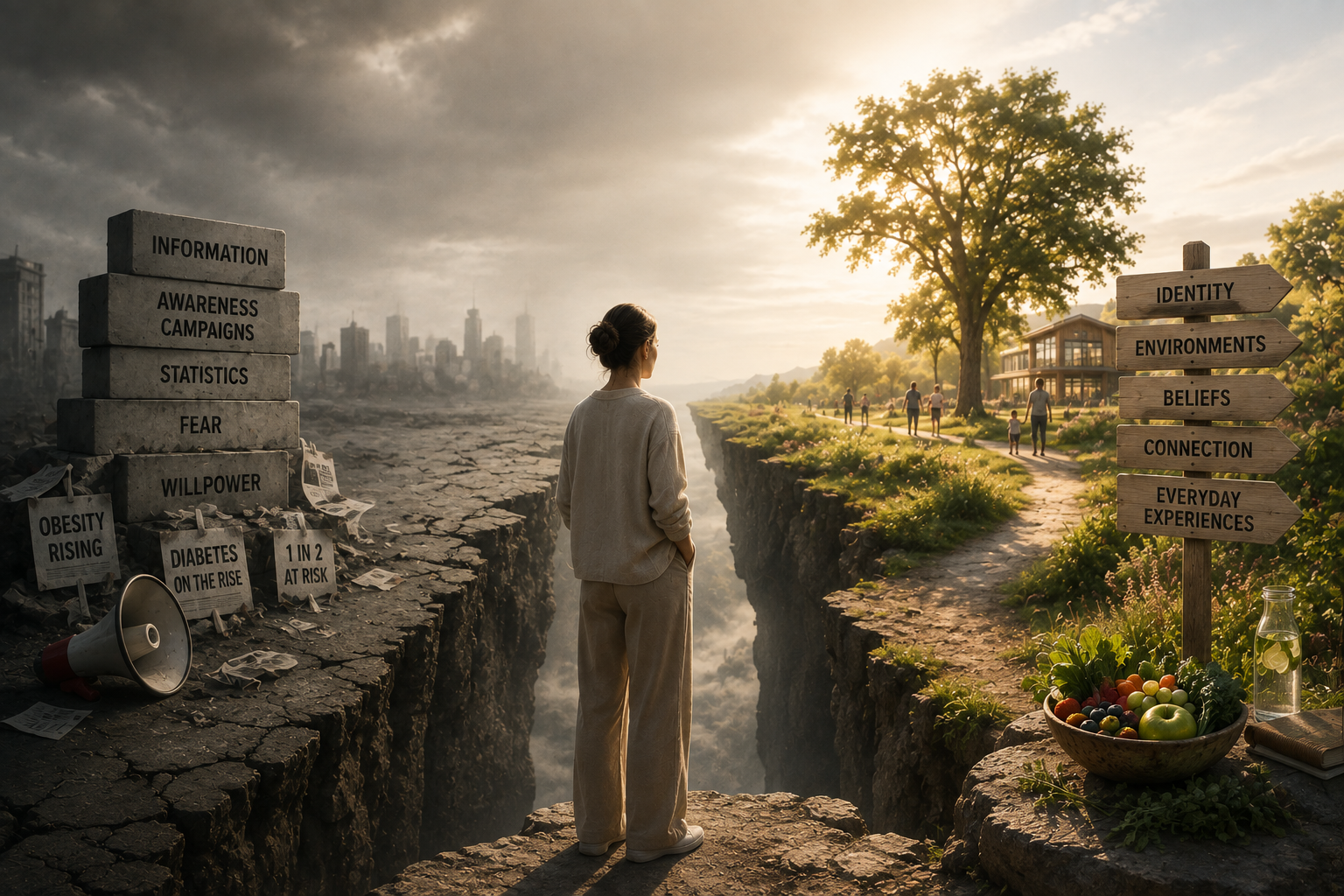
For decades we've communicated health through statistics, disease risk and fear-inducing future outcomes. While some of these messages may have their place, I rarely see them create lasting transformation. They may create concern, but concern isn't the same as change.
Then comes perhaps the most celebrated strategy of all, willpower.
People decide this time will be different. They become disciplined, motivated and determined. For a while everything goes well, until life happens. Work becomes stressful. Children become unwell. Relationships become challenging. Energy drops. Before long, familiar behaviours quietly return.
I don't see this as a failure of character. It's a very human response to life's pressures. If anything, I think we've misunderstood how lasting behaviour change actually happens, particularly in a world where chronic stress has become so commonplace.
To me, we simply cannot afford to leave this understanding of behaviour change out of preventative health.
Education, awareness and information all have value, but they are not where behaviour change begins. Behaviour doesn't emerge in isolation. It grows from beliefs, emotions, repeated experiences and the environments that quietly shape how we see ourselves every single day.
Identity doesn't emerge in isolation either. It takes far more than a leaflet, a campaign or a single conversation with a healthcare professional. Identity is cultivated over time through stories, the people around us, the environments we spend time in and the messages we receive every day. It is shaped by what is celebrated, what is rewarded and what becomes normal. Think about the extent to which sugary drinks continue to be associated with elite sport and athletic success. Those associations quietly influence identity far more than we often acknowledge.
Imagine if preventative health was designed with this understanding at its core.
Imagine creating daily environments that consistently reinforced health, resilience and wellbeing. Imagine sporting events becoming opportunities to celebrate the choices athletes make to perform at their highest level, rather than simply another platform for products that undermine long-term health.
Imagine workplaces that celebrated sustainable energy rather than chronic busyness. Schools that celebrated self-care and lifelong health skills alongside academic achievement. Communities where healthy living wasn't something people were trying to do, but simply part of who they believed themselves to be.
We've spent decades trying to scare people into behaving differently, or trying to convince them their choices are inappropriate, when what we need to do is create environments where people feel valued and supported, see themselves as a priority, and be inspired to make choices that align with an identity rooted in feeling good about themselves.
In all the years I've worked with people, I've never seen lasting behaviour change achieved with information alone. We have to inject this wisdom and understanding of identity-based behavioural change into preventative health strategies for them to have a chance of achieving their intended outcomes, which today we need more than ever.
About the author
Dr Laura Holland is an advisor in preventative health and human capability, with a background in economics, nutrition and integrative medicine. Through BeU, she works privately with individuals, advises organisations, and writes about the future of health, behaviour and human flourishing.
The Consumer Base Isn’t Infinite
Why Population Health Is Becoming a Commercial Issue.
One thing I love to do, or perhaps more accurately, one thing my mind loves to do, is to continue a thought. To take an idea, play it through, and ask myself, what happens next? And then, what happens after that?
In reality there is rarely an endpoint. Systems are dynamic. New variables emerge. But I often find that if you keep following a line of thinking for long enough, you eventually arrive at an assumption that everyone seems to have accepted without ever really questioning.
Lately, inspired by recent conversations, I've been wondering whether one of those assumptions is the consumer base itself, people.
Businesses, investors and governments understandably spend a great deal of time thinking about economic growth. Consumer confidence, spending patterns, market expansion, productivity and profitability all feature heavily in the conversation. Underpinning all of this, often without being explicitly acknowledged, is a simple assumption: there will always be consumers, people, willing and able to buy.
But what if that assumption isn't as robust as we think it is?
Every consumer business, regardless of sector, relies on people being both willing and able to purchase its products or services. The willingness to buy is influenced by many things; marketing, branding, habit, culture, convenience and price.
However, the ability to buy is something else entirely. It depends on having an income, which depends on participating in the economy, which depends, to a remarkable extent, on health.
Health influences our productivity, our cognitive performance, our energy, our resilience, our ability to work, and ultimately our disposable income. In other words, the strength of the consumer base is inseparable from the health and wellbeing of the population, yet we rarely talk about them together.
Instead, population health is often discussed as a cost. Rising healthcare expenditure. Increasing demand on health services. Growing burdens of chronic disease. These are all important conversations, but what if declining population health is also becoming one of the biggest commercial risks of our time?
If we continue this thought, we are seeing rising obesity, increasing rates of type 2 diabetes, worsening metabolic health, growing mental ill health, declining fertility and more people leaving the workforce because of long-term illness.
Each of these trends has implications far beyond healthcare. They affect productivity, economic participation, disposable income, consumer confidence, and ultimately, consumption itself.
My direct nature isn’t always appreciated, but to spell it out, if people are unhappy, experiencing chronic health issues and not having babies, then the productive consumer base with disposable income to buy products and services is dying out! Perhaps the greatest long-term threat to consumer spending isn't inflation, but the declining health of the consumer.
This is where I can go down a rabbit hole, but humour me for a moment, let’s take an ultra-processed food company, or indeed any business whose commercial success depends on encouraging frequent consumption of products that diminish, rather than enhance, human wellbeing over time.
Their objective, quite understandably, is to maximise sales. To increase frequency, build loyalty and create demand! But if we simply continue that thought, what happens decades later? What happens if, collectively, the consumer base becomes less healthy, less productive and less economically active as a consequence of the environments we've created?
At what point does short-term commercial success begin to erode the long-term foundations upon which future commercial success depends?
To be clear, this isn't about singling out ultra-processed food companies. Nor is it about removing individual choice. I firmly believe people should have the freedom to make their own decisions, including what they choose to eat. Nor is this challenge confined to food. There are many industries that benefit from patterns of consumption which, over time, may reduce rather than enhance human wellbeing.
The question I'm asking is much simpler than that. What happens if we just continue the thought? Because eventually, we arrive at a rather uncomfortable possibility, which isn’t that pleasant to talk about.
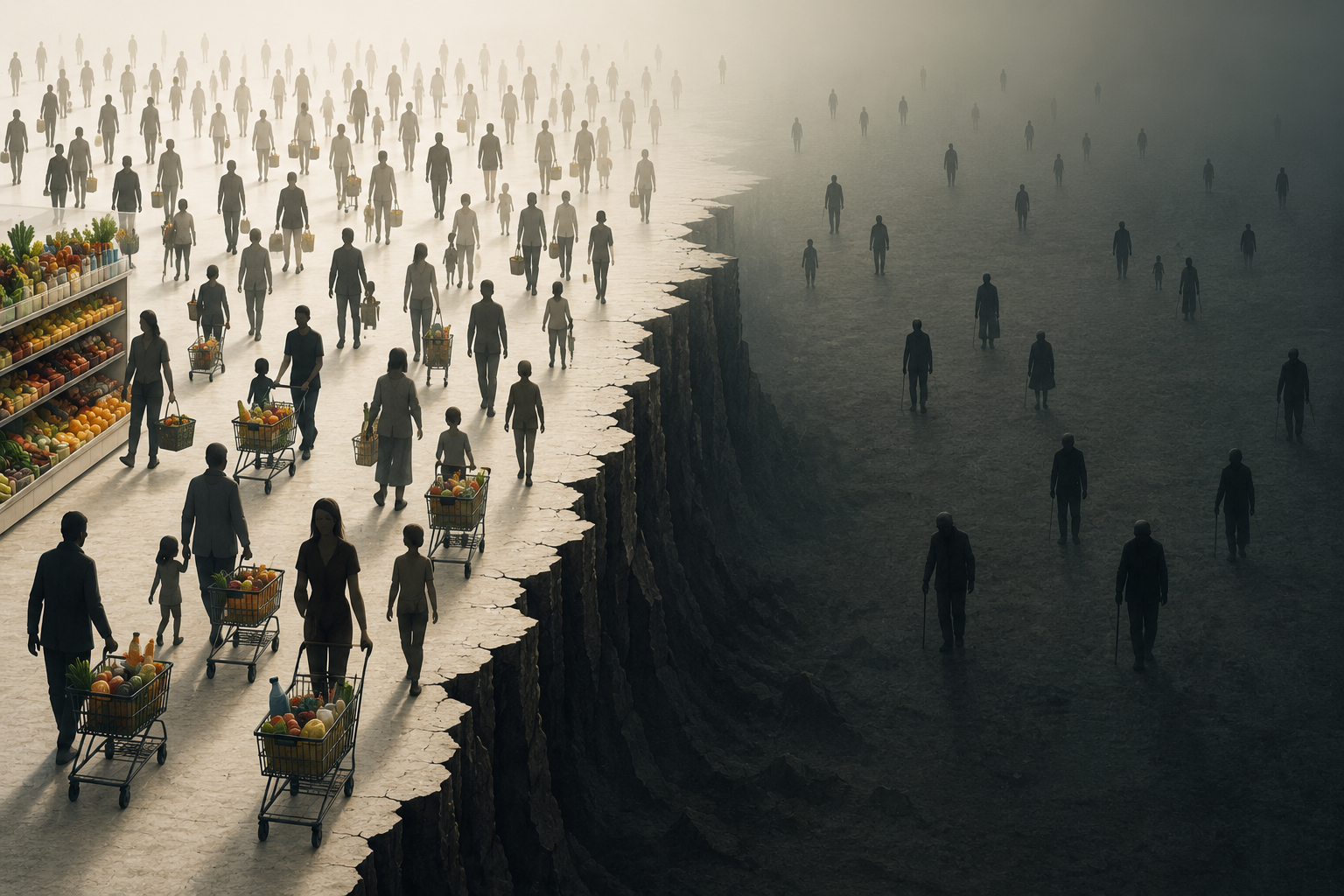
The consumer base itself isn't infinite. It's a living population whose ability to consume depends on its ability to thrive.
Perhaps we've become very good at thinking about customer acquisition, customer retention and lifetime customer value, while giving remarkably little thought to preserving the health and capability of the people who make those concepts possible in the first place.
We increasingly recognise that natural resources are finite. We talk about protecting biodiversity, preserving soil health and managing environmental sustainability because we understand that economies ultimately depend upon healthy natural systems. Shouldn't we begin thinking about our human systems in much the same way?
People are not an infinite resource. Their health, capability, fertility, productivity and ability to participate in society and the economy are not constant, they require thought and investment if they are to remain resilient over time.
Perhaps this is where preventative health needs to evolve, not simply as a way of reducing healthcare costs, or as corporate social responsibility, it goes way beyond this if you continue the thought!
It becomes an obvious and necessary strategy to protect the long-term resilience of the consumer economy, which is fundamental to our current system.
Viewed through this lens, preventative health becomes far more than a moral obligation, it becomes an investment in preserving the future consumer base upon which every consumer business ultimately depends.
The moral economics of this discussion are perhaps a perspective for another day. But from a purely commercial standpoint, I can't help wondering whether we've overlooked something remarkably obvious, although I understand why because it’s an uncomfortable, confronting conversation.
If the long-term trajectory of population health continues in its current direction, are we quietly eroding the very consumer base upon which so much of our economic growth depends? Perhaps the greatest competitive advantage of the future won't simply be attracting more customers, but helping ensure there are healthy customers left to attract.
About the author
Dr Laura Holland is an advisor in preventative health and human capability, with a background in economics, nutrition and integrative medicine. Through BeU, she works privately with individuals, advises organisations, and writes about the future of health, behaviour and human flourishing.
Who Is Creating the Next Generation of Healthy Consumers?
The Necessity of Demand-Led Preventative Health.
Have you ever had one of those moments of realisation that leaves you wondering, how is this not being talked about?
The work I do gives me the privilege of sitting at very different tables. Some days I'm speaking with governments about preventative health policy. Other days it's retailers, healthcare providers, food producers or agricultural organisations. And ultimately, every conversation leads back to families, because that is where health is lived and experienced.
Around the world, there is growing momentum behind preventative health. Governments are investing in healthier populations. Food manufacturers are reformulating products. Retailers are expanding healthier ranges. Agricultural policies are supporting the production of fresh fruit, vegetables and dairy. Farmers continue to work tirelessly to produce the food that sustains us.
All of this attention means the supply side of healthier living receives enormous investment, innovation and strategic focus. What surprises me, and increasingly shocks me, is how little attention is given to the demand side of the equation.
What is the value of producing an abundance of healthy food if there’s dwindling demand, with fewer and fewer people genuinely wanting to eat it?
The imbalance is quite remarkable. Markets don’t survive on supply alone. They depend on demand. Yet when we think about creating healthier populations, we rarely ask one of the most fundamental economic questions:
How are we creating the next generation of healthy consumers?
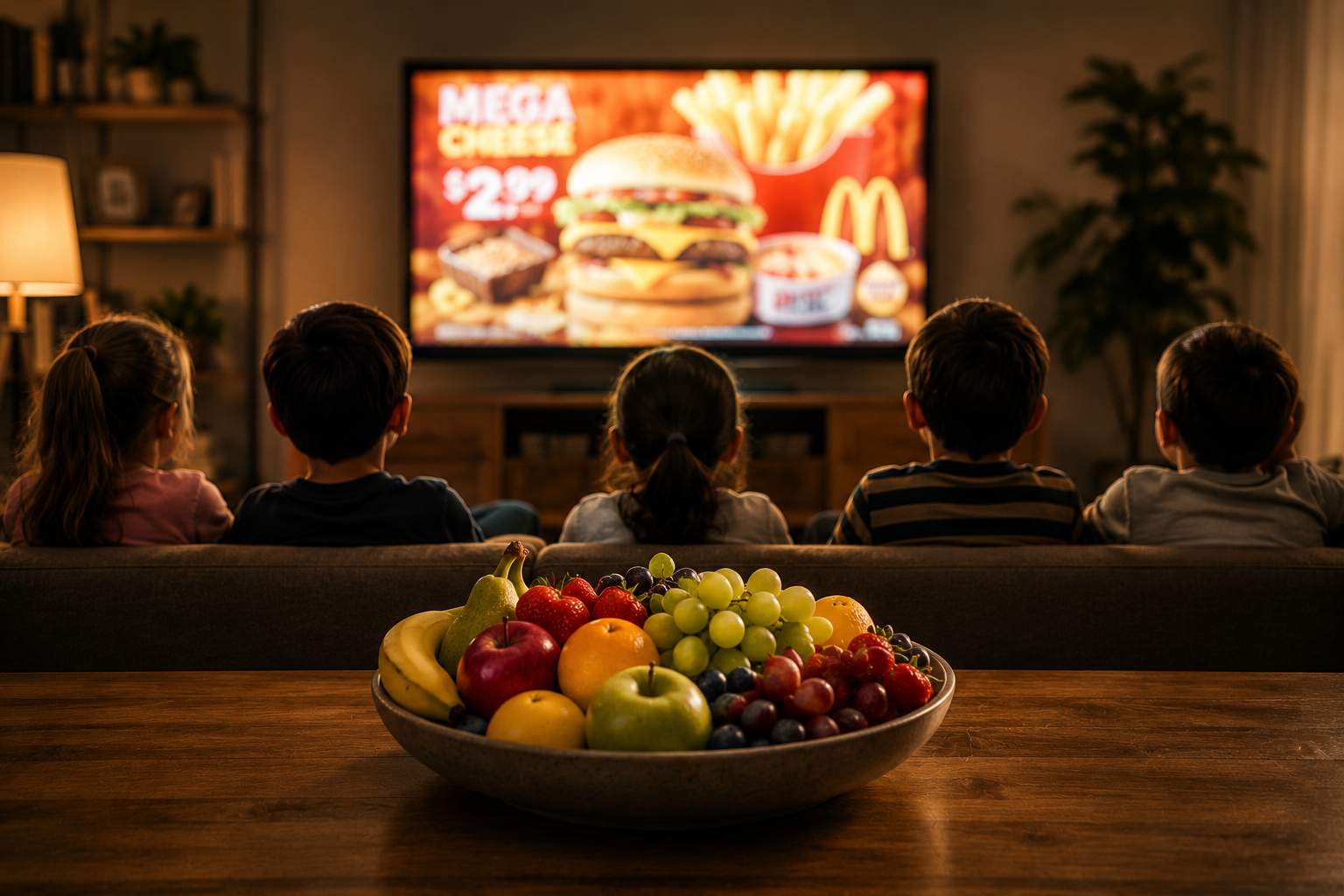
Children are not born with an intrinsic preference for ultra-processed foods (although their ingredients are designed to hit dopamine centres and be addictive), nor are they born loving broccoli. Their food preferences are shaped over time by repeated experiences, emotional associations, family routines, culture, marketing and the environments they grow up in.
If we want healthier populations in twenty or thirty years' time, surely we need to invest not only in growing healthy food, but in growing the desire for it.
Demand is not accidental. Every major ultra-processed food company understands this. They invest billions in creating familiarity, emotional connection, brand loyalty and habitual consumption from an early age. Despite overwhelming evidence linking frequent consumption of many ultra-processed foods with poorer health outcomes, demand continues to grow because demand has been deliberately cultivated.
By contrast, we often assume that healthy food will simply sell itself. If we improve availability, increase affordability and produce enough fruit and vegetables, demand will naturally follow.
But behavioural science suggests otherwise. Preferences are learned, habits are formed, and demand is most certainly shaped.
Accessibility and affordability are obviously essential, particularly from an equity perspective. But they are only part of the equation. If children are unfamiliar with fruit and vegetables, if families lack the confidence or opportunity to prepare them, if taste preferences have been conditioned by highly processed foods engineered for maximum palatability, then increasing supply isn’t going to touch eating habits.
This is where I believe one of the greatest missed opportunities in preventative health lies. For decades, we have invested heavily in producing healthier food while investing comparatively little in creating the lifelong demand that makes those investments economically, agriculturally and socially sustainable.
Perhaps the greatest irony is that while governments invest billions supporting the production of healthier food, we continue to operate food environments that are remarkably effective at generating demand for the very products contributing to the burden of preventable disease.
This isn't simply a nutrition issue, it’s a system-wide issue, from agriculture to economics, from public health to human capability, and today’s children are right at the heart of this issue. They are the future customers of the fruit, vegetables and dairy produced by our farmers. They are the future workforce upon which our economies depend. They are the future parents who will shape another generation's relationship with food.
If we fail to cultivate healthy demand during childhood, we undermine the very systems we are trying to strengthen. Perhaps the next frontier in preventative health is not simply producing healthier food and increasing the availability of healthier options or reformulated favourites, it is creating healthier demand.
I believe demand-led prevention is a missing piece of system-level thinking. Alongside investment in agriculture, food innovation and healthier supply chains, we need equal ambition in helping children and families genuinely enjoy, choose and value healthy food.
Without sustained demand, even the strongest supply-side strategies will struggle to deliver their full economic, agricultural and public health potential. Creating healthier demand is not separate from preventative health, it is fundamental to it.
About the author
Dr Laura Holland is an advisor in preventative health and human capability, with a background in economics, nutrition and integrative medicine. Through BeU, she works privately with individuals, advises organisations, and writes about the future of health, behaviour and human flourishing.

The Return On Time; Why the Next Luxury Is Human Capability
What if the greatest luxury of the future isn't having more time, but having the capacity to experience it more fully?
For generations, wealth has been measured by what we owned, and then what we earned, but today, I wonder whether the real measure of wealth is becoming something else entirely, and something far more difficult to accumulate. Time.
Not simply having enough of it, we all have access to the same 24 hours in a day, but we don’t all have access to the same capacity to experience its potential, and herein lies an interesting journey into the next, or arguably, the ultimate, luxury.
Since the late 18th century we’ve moved through successive industrial revolutions that have transformed the way we produce, consume and communicate. Each promised, and delivered, greater efficiency and, with it, the possibility of creating more time. Yet, in many ways, the opposite seems to have happened.
As we find ourselves in the midst of the fifth industrial revolution, technology has made almost everything faster. AI can generate a business plan in the time it takes to send a What’s App, and my scarily good Instagram algorithm shows me products I want without searching for them, and they arrive the next day, sometimes even on the same day!
Information is now limitless and immediate, and yet many of us feel we have less time than ever. Whether this shortage is real or perceived doesn't matter. Our experience of time has changed, and with it, the value we place upon it, consciously or not.
One of the simplest principles in economics is that scarcity increases value. As time feels increasingly scarce, its perceived value continues to rise, exponentially in my personal opinion, and this is stress-inducing for many people, myself included. But I don't think the real story is about time per se, the supply is steady and fixed! I think it's far more about our understanding of how to enhance our capacity to experience it.
The experience of time is deeply personal. The same hour can feel expansive or disappear unnoticed. The same holiday can become deeply restorative or simply another form of exhaustion. The same dinner can strengthen a relationship or pass by in distracted conversation.
Time itself doesn’t change, but our experience of time does, relative to our state. In this context, the return on time is realised through the state of the person experiencing it.
A day experienced with clarity, vitality and presence is fundamentally different from the same day experienced through the lens of chronic stress, exhaustion or quiet survival, and yields a completely different return.
As the perspective of time becomes increasingly scarce, and its return being directly linked to the state of the person experiencing it, human capability becomes one of the most valuable investments we can make. In this sense, health and wellbeing become far more than personal aspirations, they’re foundational in order to optimise successful outcomes, in every and all situations, personal and professional, individually and collectively.
Investment in human capability, our biological, cognitive, emotional and relational capacity to engage fully with life, is essential to optimise the return on time.
For generations, we've largely thought about wealth in financial terms. Yet perhaps one of the greatest forms of wealth is the ability to experience the richness of the present moment. Not because we've accumulated more, but because we've cultivated the biological, psychological and emotional capacity to be fully present for it.
In that sense, wellbeing is no longer simply about preventing illness, it becomes the foundation upon which the value of time is realised, which has implications far beyond the individual.
For organisations, it raises questions about leadership, judgement and sustainable performance.
For family businesses and family offices, it raises questions about preserving the capability of those entrusted with stewarding wealth across generations.
For luxury hospitality, perhaps the greatest opportunity is no longer simply creating extraordinary environments, but helping people become more capable of experiencing those extraordinary environments, and their lives, than when they arrived.
For nations, it raises a much broader question, if human capability underpins innovation, creativity, productivity, resilience and social cohesion, should preserving and strengthening it become one of our greatest investments?
The future of luxury isn't another experience, it’s the capacity to experience time, and our life, to the fullest.
As someone who began my career in economics before moving into nutrition and integrative medicine, I find myself increasingly drawn back to the same question. How can we increase the return on the time we have?
Because having the capacity to experience the richness of the moment as our fullest self, and to enjoy the luxury of the present, requires investing in human capability in order to realise the highest return on time. And, who doesn’t want to feel like they are living their full potential and raison d'être? I know I do.
About the author
Dr Laura Holland is an advisor in preventative health and human capability, with a background in economics, nutrition and integrative medicine. Through BeU, she works privately with individuals, advises organisations, and writes about the future of health, behaviour and human flourishing.